Rapid Fire Hacks

There are few things I enjoy more than reading something and testing it. Through this process, I have built up an arsenal of techniques, tactics and strategies that I routinely use to make things easier. 

There are plenty of other techniques that I have found that are highly effective – most of them become tedious or present so much effort that I fail to do them consistently. These ones, however, are so easy that I am able to keep them consistently without much thought.

Below is a collection of “Rapid Fire Hacks”. These are really easy to test and highly effective. Combining several of them will compound to even greater benefits.

Pick and choose from the list below, and I’m sure you’ll find something useful.

Working: Aim for Deep Work.

Deep Work, the term most associated with Cal Newport’s best-seller of the same name, is one of the best hacks that I have found to increase my output when working. I easily find a 10x output across both quality and quantity with this compared to when I am operating doing “Shallow Work” – times when I am distracted, have something on in the background, multitasking, etc.

Here are a few techniques that I use to achieve Deep Work with more ease, and improve my working in general:

  • Listen to the same song on Loop. I got this one from Ryan Holiday, and it honestly works a charm. It’s like a short-cut to achieving the Flow state that is so valuable. All you need is a song and a pair of headphones and you’re off to the races.

I use this with two variations: when learning / reading, I use a song without lyrics. When writing / journaling, I use a song with lyrics.

I tend to work in pomodoro sessions – of either 25 minutes, or 50 minutes. You eventually forget that the song is on and it helps establish a rhythm, but I still like to switch to a new song at the end of each session.

  • Use XYZ as a placeholder. I cannot tell you how much this has saved me in my own personal writing and my University work. Every time I hit a snag, be it forgetting an exact term, not knowing a source, or just not liking the way something is written I use this technique. 

Often it’s as simple as this, (XYZ – Don’t like the way this is written, clean it up.), but it helps me keep momentum and makes my editing ten times easier because the first thing I start with is to search the document for XYZ and methodically work through and clean it all up.

  • Write from a skeleton. Another writing hack since that’s most of what I do at University, but you should write from a topic skeleton – just a collection of headings, with relevant sources, passages, lines and ideas beneath them. 

Not only does it improve the structure and coherence of your writing, but it’s a quick fix for writer’s block and needless procrastination. You always know what’s directly ahead and have your material prepared for you.

  • Put your phone out of sight. Common sense advice but such a major difference. It’s not enough to put your phone on Do Not Disturb (although, you should do that too) but by putting it out of sight you remove all the habitual temptations to check it. 

Keep it in another room or in a drawer, and watch your productivity skyrocket.

  • Keep a Distraction Sheet. We are more often than not our worst enemies when it comes to distractions – we remember a task we need to do, a message we need to send or a topic we need to google. 

Don’t break your concentration – instead keep a sheet of paper on your desk and record every distraction that occurs. Write it all down and check it once your pomodoro session is over or your task is complete. 

(As a side note, a pocket notebook comes in handy here because you can just record them in there and forget about it.)

Productivity: How to be effective and efficient.

I have tested entire systems of personal productivity – but they end up either being too tedious or difficult to maintain. Instead, here are some simple tips to boost your productivity noticeably overnight:

  • Nightly Notecard System. I have written about this before in both my newsletter and as part of my Killing it with Kagan series. Honestly – it’s such a simple and powerful life hack.

Keep the list small – with a max of five tasks. I like to have One major, two other important ones and two other lighter tasks. This system ensures that I make each day as productive as possible and stop stressing over when I am going to do things.

However, this system only works well if you keep to a simple rule: Whatever you put onto the notecard, MUST get done that day. No excuses.

It can seem a bit intense / fixed, but it helps you ensure that you remove the stress of the tasks and that you only record the things that you must get done / deeply desire to get done.

  • Use simple questions. I am a big fan of finding questions that can improve my life just as much as answers.

Two that I am really using a lot at the moment are:

  1. If this was the only thing that I got done today, would I be satisfied?

This question comes from Tim Ferriss. I use this one to constantly reflect before listing my major task the night before. If it’s a yes, I make sure that I put that on my list of to-dos.

  1. Am I being productive or just active?

I liked this question, from the 4-Hour Work Week, so much that I actually set it as a reminder – so now, on the hour mark of every hour, my phone and laptop buzz with that simple question. 

It makes it far easier for me to stay on task.

  • Get an Accountability Buddy. This is another ridiculously simple trick that I have found very helpful. I use the site Committo3.com to list my three important tasks every day and check them off.

I find this works best when you do it with someone you respect. For example, I do it with my friend Elijah whose opinion I value greatly and who will follow up if I leave anything incompleted. 

Overall Life Improvement:

  • Journal Daily. Journaling is still – even with the amount of people recommending it – one of the most underrated habits that you can do. Putting pen to paper for 10 minutes is worth 10 hours of just thinking on a problem.

Try it for thirty days – every morning to clear your mind and every time you find yourself overthinking or struggling with a problem. Trust me, you won’t want to give it up.

The final Rapid Fire Hack that I have is Test things.

Pick one or a few of the hacks above and test them for yourself. Some might not work, but others will. You won’t be able to radically improve your life until you make a habit out of testing these different ideas.

Killing it with Kagan: Week Two.

Another week of the experiment down. It’s going better than I expected and really interesting to see how the things combine together and compound. Looking forward to the weeks ahead.

My focus since I had a busy week ahead with University was on things that were either easy to test or boosted my productivity – I tried to pick as many as I could that overlapped.

I tested five additional things this week, on top of the habits I continued from last week:


1. Plan + Review Week
2. Notebook – write everything down.
3. Daily Mantras
4. Cold Showers
5. Working with No Charger


1) Plan and Review Week.

Despite how often I have read about the benefits, I have never really tested this – but last Sunday, I sat down and mapped out my entire week, slotting everything into my Google Calendar.

Noah’s system incorporates using categories (which I borrowed from my goals) to create a list of all that needs to be done and scheduled them in.

Simply by doing this, I was able to automate everything that I wanted to get done and my time management was easily broken down.

2) Notebook – write everything down:

Suprisingly, this was a habit that I previously did through out High School but completely abandoned it once I entered University. I’m definitely glad that I picked it back up again.

It’s honestly such a simple yet effective way to capture everything – obligations, ideas, reminders, to-do’s. For some reason, anytime I try to use my phone to do this I am nowhere near as effective as when I use a physical notebook.

Easy to implement – just keep a notebook or sheet of paper with you, and write down everything you don’t want to get – with a great ROI.

3) Daily Mantras:
Technically these are also part of his Maker Morning routine but I omitted them in favour of just rereading my goals each morning.

They’ve been recommended a few times across his other videos, however, so I took them more seriously. I wasn’t creative enough to come up with my own, so adapted the following ones from Stoicism:


I just swapped the yours with my, and added an I will at the beginning. Working so far!

4) Cold Showers

This is another habit that I previously kept but lost over time.

It’s as simple to start as switching your shower to cold for the last 10 seconds – then build up a tolerance for a longer time and colder water, until you can go for the whole shower.

The health benefits of Cold Showers are well documented and often recommended – but the most immediate is that it’s a test of willpower and discipline.

If you can force yourself through a cold shower, you can force yourself through most other tasks you encounter that day.

5) Working with No Charger.

This tactic applied to working without a charger on your laptop – but I found it effective I have switched to charging my phone overnight and not going near a charger for the rest of the day.

It’s pretty self-explanatory, charge your device and then go work without access to the charger. Limit yourself to that one charge – and you’ll realise how easy it is to become hyper-focused on the task.

Easy way to align your priorities (and prevent wasting time on your phone).

I was quite impressed with how such seemingly simple things boosted my overall productivity.

Planning on keeping every single thing that I tested this week, and using them to help me leverage the other strategies, tactics and tools that I plan on using.

Killing it with Kagan: Week one.

My first week of living by Noah Kagan’s advice has drawn to an end. I decided to start small with my testing – and so far, so good.

The key things that I tested were:

  • Morning Routine
  • Nightly Note-Cards
  • Following Through
  • Goal-setting.
  • Action-biased.

Morning Routine:

Noah’s morning routine is pretty simple and highly effective: Make your bed, Do Pushups, Journal, Learn Something, Read yearly goals and personal mantra, and daily gratitude.

This routine has been really effective – and on the day that I did miss it, I noticed the significant difference.

I think the key is in the balance, you’re getting a great blend of accomplishment, mental and physical movement, motivation and get a chance to clear your mind before the day begins.

Nightly Note-cards:

If you struggle with knowing what to do with your day – especially if you’re stuck doing online university at the moment – a nightly note-card / index card can be a great way to move forward.

Doing it the night before prevents any worry in the morning and helps me prioritise what my targets are through the day. I limit myself to the 5 most important items for the next day.

The nightly-note card is best used with the next point: following through.

(As a side note, I have also been using the website, committo3.com, with my friend Elijah who recommended it – which allows me to prioritise even further. Basically, we both set 3 things each day and check them off on the site when we complete them. A great way to keep accountable.)

Following through:

Noah has mentioned this several times, most notably in his millionaire habits video. I’m starting small with this one and trying to build it into a habit. Quite simply, just follow through on what I say that I am going to do.

To really kick-start this habit, my rule has been to ensure that each of the five items on my notecard are completed that day – no matter what obstacles I encounter.

The benefits to it are great:

  1. Develops momentum.
  2. Reduced stress – I worry less about the tasks since I know that I am going to get them done, no matter what.
  3. Prioritising more – Knowing that I might have to force myself to get something done means I have only been putting down my highest-importance tasks.
  4. Clearer intentions – This one is quite simple, but I have taken away any ambiguity with my directions. I know exactly what I need to do so I can get it done quicker.

The only drawback to this has been if my day gets busy and I find myself up late working to complete the tasks. Definitely be paying greater attention to Noah’s advice on time-management and productivity next week.

Goal-setting:

I completely redid my goals when I started this experiment. I’ll share them at a later date but the system I adopted came from a couple of Noah’s videos (here and here).

A few of the key things that stood out to me

  • Have a Yearly Word. This helps make decisions, goals and plans far more effective and in line with what you’re trying to do.
  • North Star Metric. Noah spoke about the power of having a North Star Metric for business to ensure you’re heading in the direction that you want. I’ve applied this to my personal goals as well.
  • Deadlines + Rewards = Fulfilment. That’s a very simple formula that I am adopting. All of my goals have the same deadline but different rewards. It helps add motivation to each and every one of them.
  • Categories. For me, I broke mine into Work, Personal, Health, Relationships and University. It helped me ensure that I was achieving a balance moving forward and actually aiming for the things that I want to achieve in each area.

Action-biased:

This is more of a mindset than a strategy or tactic. Noah is HUGE on Action and it makes sense – there is no progress without action. Kyle, author of the Pocket Guide to Action writes, ​​“Inaction is the cancer that will eat away at your soul until it is gone. That’s scarier than anything.”

For me, I started adopting it by launching this experiment before I was ready. I wanted to spend a lot longer planning and researching (read: procrastinating). To counter that, I sent an email to Noah Kagan, and once he gave his greenlight for this idea, I launched straight into it.

I am planning on using this action-based process for any other projects / ideas I pursue throughout this experiment.

That’s all for Week One. Overall thoughts? It’s definitely been great – my productivity has increased and I’m really looking forward to testing more and more over the coming weeks.

Thanks for reading.

Killing it with Kagan: My New Experiment.

I am going to be doing a new self-experiment / challenge that I will be tracking here on the blog. Eventually, I might move the content to a new site, but for now It will all be recorded on here.

What’s the experiment?

For the next 100 days (I’ll explore why I chose 100 days below) I am going to be living by the advice of Noah Kagan.

If you’re unfamiliar with him, he’s the Founder of Sumo Group, including AppSumo, and has a pretty awesome track record of successful companies and products. You can learn more on his Youtube, or from his Blog.

What will the experiment involve?

There will no doubt be iterations and changes throughout – but they’ll all be based around my overall goal: Live by the advice of Noah Kagan.

For me that involves:

  • Launching a business using his advice – found on his Youtube and Monthly1k course.
  • Attempting to grow an audience and improve my content using his tactics.
  • Read and implement the books that he most recommends.
  • Employ his advice in other areas of my life.

The Law of 100

This is something that Noah Kagan suggests to ensure that you stick with something. Dedicate yourself to 100 attempts at it – for example, a Youtube channel must put out 100 videos.

In this case, I will be applying the Law of 100 twice. First, I will be living by his advice every day for 100 days. Second, I will test 100 pieces of advice from him.

This helps us prevent

What now?

I will be providing frequent updates about my progress, goals, whats working and whats not. If you’re interested in following along and getting a summary / curation of his content, subscribe to my newsletter in the link below:

sendfox.com/thezachariahlewis

Fast to Decide, Slow to Change

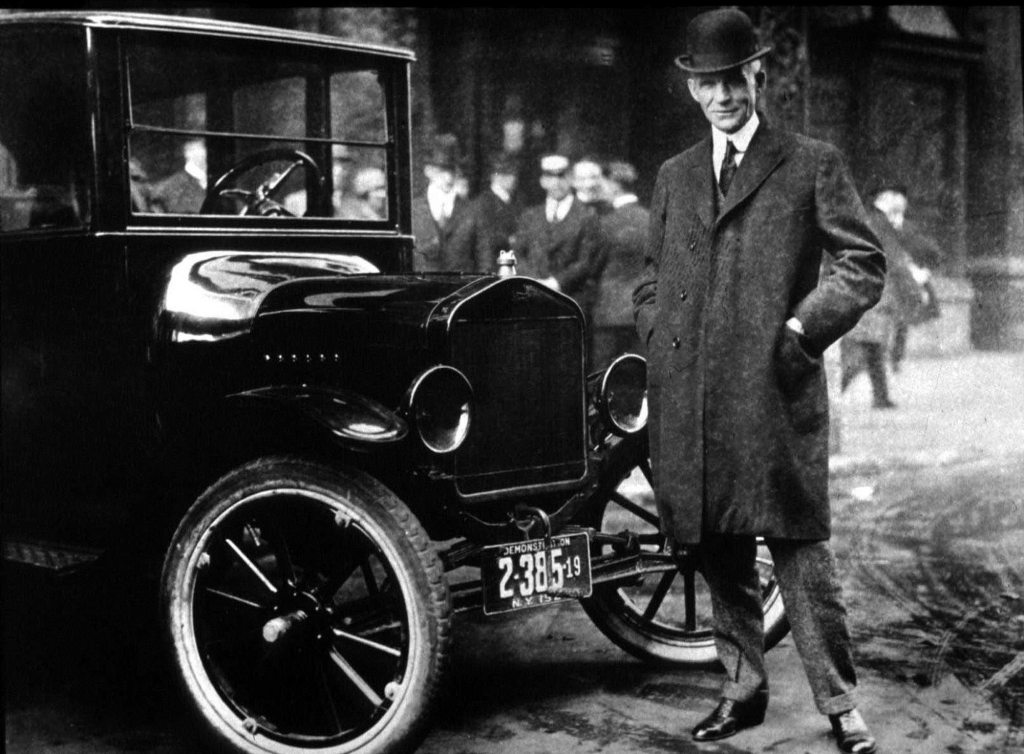
Henry Ford is one of the most interesting figures in modern history.


He managed to rise himself from illiteracy, poverty and ignorance in the span of ten years, and within twenty-five years had become one of the most successful businessmen in history and one of the most powerful figures in the World at the time.
One of the keys to Ford’s meteoric rise to success came in his decision-making ability. 


Ford was always fast to make his decisions and put them into action, but was always slow to change them or stop his plans.


This ability can be found in many of history’s successful people.
John D. Rockefeller was always patient and planned long-term. Once he had his plan established, he was fast to put it into action. He was slow to change these decisions – weathering an onslaught of criticism and adversity that would have crumbled the progress of most people. It was because of this refusal to back down, and slow approach to changing his plans and decisions, that allowed Rockefeller to become the wealthiest self-made man in history, as well as history’s greatest philanthropist.


How can we apply the lessons of these two men?


Make your decisions fast. Don’t procrastinate. Seize the day. Proceeding with a 10% rate of effectiveness, is better than never proceeding at all while searching for an effectiveness rate of 100%.


Be slow to  change your decisions. Correct persistence is the one thing that is guaranteed to work, given enough time. If you keep to your goals/plans/decisions, you will benefit in some form or another. The only way to never progress or achieve nothing, is to give up.


The world is full of people who could’ve been great, had they been slower in changing their decisions.


Ask yourself: Where would you be now if you kept to the decisions you made? The plans you laid? The goals you set? Your promises to yourself?

The answer should be motivation enough to make your decisions faster, and be slower in changing them.