Zachariah 2.0 – The Objectives

For those of you who receive my newsletter, earlier this week I shared that I was starting a new program of personal development.

It involves 20 objectives which will be explored here. This is part 1 in my 3 part series exploring the challenge.

GoalsHit 50%+ complete on all my one-year goals.

I have four 1 year goals, that I need to achieve by end of June 2024. This will put me ahead of schedule and make sure that I don’t get distracted away from them.

ThinkingHave written clear guides and principles for decision making. Acquire Mental Models. Improve thinking processes.

The quality of our thinking determines the quality of our lives. I know that I need to improve my decision making – and I know the value mental models and thinking processes carry.

IncomeReach a consistent income of a set multiple of my outgoings through 2+ income streams while increasing my income potential.

Live well within your means is the words echoed by philosophers and financial advisers alike. No personal finance book has ever encouraged someone to live outside their means. This goal will keep me well inside my means – while also forcing me to become more valuable and increase my earning power.

RelationshipsImprove my key relationships 2-5x. Add 5 interesting people to my network.

I don’t want my relationships with the important people in my life to suffer – this is a good way to make sure that doesn’t happen. But beyond just avoiding suffering, I want to expand and improve those relationships. I also have several interesting people in my life that I enjoy speaking to – I would like to add eeven more to my network.

WealthIncrease my net worth by a set amount. Build up short-term and long-term savings.

This should be a natural side-effect of the income goal – but it helps me keep it front of mind and make better decisions.

ReadingRead 20+ books (avg. 250+ pages). Implement 10+ non-fiction books. Create and refine a reading system.

That’s about a book every 5 days read – which should keep me busy. It also encourages me to experiment with non-fiction books I’m reading. The reading system I create should help both of these – and give me a system I can rely on in the future.

GenerosityIncrease tithe to a set %. Donate a set amount. Spend a set amount on gifts.

This one is simple: I want to get better with success. I want to be more generous and this goal will help facilitate that in a trackable way.

Physical HealthDevelop a clean eating practice. Improve sleep routine (7-8 hours consistently of good sleep). Get closer to a warrior physique (increase strength, flexibility, muscle mass). Increase overall energy levels.

Physical health is obviously a pillar of living well. It is on me to make sure that I’m taking care of my body, so my mind can go even further. The Warrior physique goal is related to making my body more functional for martial arts training.

Mental HealthTake care of my mental health. Develop greater patience. Increase time on the positive side of the cycle, reduce time on the negative side of cycle.

All of my goals relate to this in some way. I want to live well – and by following through on everything, I can make sure this goal is easily achieved. I think Patience is a virtue that I can always develop further.

StoicismClearly live by Stoic Virtues. Read 4+ books on Stoicism. Use Daily Stoic and Daily Stoic Journal. Write about Stoicism.

Stoicism is the best personal operating system that I have ever found. I have never gone through a bad streak of time while practicing it. I want to improve my understanding, and share my learnings. Most of all – I want to clearly live by the Stoic Virtues so that I live well.

ValueIncrease my value to others by acquiring skills, knowledge, and resources.

There’s a quote that I’ve loved for a long time – attributed to Einstein but that may be apocryphal – that simply says: Try not to become a man of success, but rather try to become a man of value.

I think that if I increase my value, success will follow.

Writing Improve my writing quality. Produce 1+ newsletter and 1+ blog post a week. Write a book.

I love to write. It’s one of my favourite things to do – but I don’t do it enough, and I’m not very good at it. This goal will help me fix that by forcing quantity and quality improvements.

FutureCreate a system to guarantee the future will be better. Use long-term thinking.

By following all of the other objectives, I will be creating a system to make sure life just keeps getting better as time goes on. Long-term thinking will help me make wiser decisions.

LearningImprove my ability to learn. Improve my memory. Trial Rapid Skill Acquisition.

If I’m going to achieve all of these ambitions things, I’m going to need to learn. a lot – this is the perfect trial by fire to improve both my learning and my memory.

ManlinessPractise the 7 virtues (Manliness, Courage, Industry, Resolution, Self-reliance, Discipline, Honour).

The 7 virtues are stolen directly from Manvotionals by Brett and Kate McKay. These 7 virtues will be important for me to succeed in life but will also make me the man that I want to become.

ProductivityExecute on Index Cards. Reach my peak productivity. Improve my time management. Take effective actions.

A study of my journals showed that there were common threads between my most productive periods. I’ll tie these threads together and make sure that my productivity is at a peak. This will help me win at the challenge with room to spare if done right.

ProjectsComplete 3+ interesting projects.

I want to get back into the habit of completing the things that I start. I also want to remember the law of diminishing intent: The longer we have an idea that we don’t action, the less likely we will action it.

I want to take three (or more) projects from idea to completion.

IdeasOvercome resistance and beat procrastination to action / experiment with 100+ ideas. Produce 1000+ ideas.

My idea lists have been a great help to me over the years – and I want to do the most important things with them: create and action.

100+ ideas actioned will be a great boost (whether experiments, habits, books, etc). Having another 1000+ produced will give me even more to work with.

Martial ArtsImprove 3x at BJJ. Acquire foundations of striking.

I love training BJJ and setting a very ambitious goal (improving 300%) will help me train more often and with more intelligence.

While I did boxing and Krav Maga for a period of time when younger, my focus has been on grappling lately. I want the foundations of striking to help me be more well-rounded.

FreedomTake advantage of current freedom. Try to increase current freedom. Lay foundations for future freedom. Go on 5+ side quests / adventures.

I would say that the outcome I’m always working towards in life is autonomy. I know that I’m very fortunate with the freedom that I already have – so I want to use it and expand it. I also want to lay the foundations for complete autonomy as I age.

The 5 side quests / adventures will help me think creatively about that freedom – and is also plain fun.

Those are the objectives for the challenge. I’m planning on providing milestone updates as time goes on.
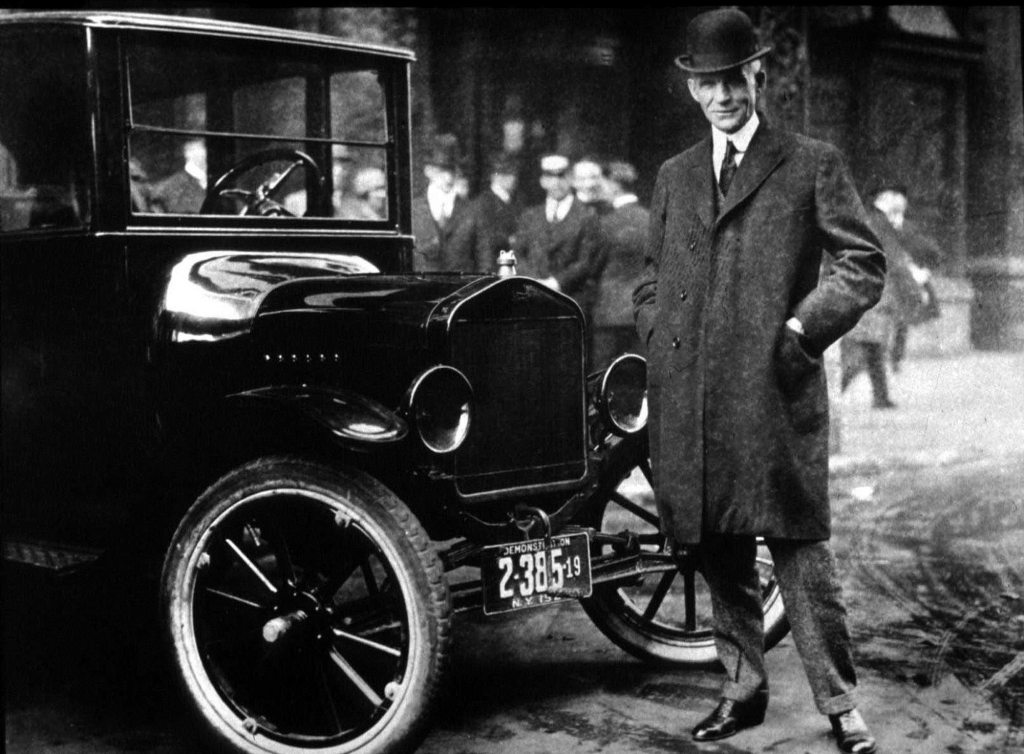
Fast to Decide, Slow to Change

Henry Ford is one of the most interesting figures in modern history.


He managed to rise himself from illiteracy, poverty and ignorance in the span of ten years, and within twenty-five years had become one of the most successful businessmen in history and one of the most powerful figures in the World at the time.
One of the keys to Ford’s meteoric rise to success came in his decision-making ability. 


Ford was always fast to make his decisions and put them into action, but was always slow to change them or stop his plans.


This ability can be found in many of history’s successful people.
John D. Rockefeller was always patient and planned long-term. Once he had his plan established, he was fast to put it into action. He was slow to change these decisions – weathering an onslaught of criticism and adversity that would have crumbled the progress of most people. It was because of this refusal to back down, and slow approach to changing his plans and decisions, that allowed Rockefeller to become the wealthiest self-made man in history, as well as history’s greatest philanthropist.


How can we apply the lessons of these two men?


Make your decisions fast. Don’t procrastinate. Seize the day. Proceeding with a 10% rate of effectiveness, is better than never proceeding at all while searching for an effectiveness rate of 100%.


Be slow to  change your decisions. Correct persistence is the one thing that is guaranteed to work, given enough time. If you keep to your goals/plans/decisions, you will benefit in some form or another. The only way to never progress or achieve nothing, is to give up.


The world is full of people who could’ve been great, had they been slower in changing their decisions.


Ask yourself: Where would you be now if you kept to the decisions you made? The plans you laid? The goals you set? Your promises to yourself?

The answer should be motivation enough to make your decisions faster, and be slower in changing them.

Habits that actually help

Life can be complex and difficult – the problems and experiences of it are way beyond the scope of this post. Instead, here are eight recommended habits that can actually help you.

These are broken down into their most simple form for ease of reading and ease of starting. 


1) Make your bed – Admiral Willaim McRaven
The premise is simple – each morning after you get out of your bed, make it. Simplicity wins out in this situation. As Admiral McRaven states himself, by doing this you start the day with a task completed. The added bonus? You get to come home to a made bed every night.


I only started doing this consistently in my final year of High School, but I definitely came to appreciate it – and the sense of accomplishment it gives at both the start and end of the day.


2) Stand up straight with your shoulders back – Jordan Peterson
Jordan Peterson dedicates an entire chapter to this topic in his best-selling book, 12 Rules for Life. While he goes far more in-depth, explaining the biological reasons and why we are pretty much lobsters, I’ll keep it simple: It gives you confidence.


The majority of communication in day-to-day life is non-verbal. You want to communicate correctly. Standing up straight with your shoulders back will help release serotonin, and gives you an aura of confidence. Not only is it better for your spine – good body language has been linked to success in many careers.


3) Clean your room – Jordan Peterson
Your room is a reflection of you as a person. It reflects your mental state. It reflects your personality. Those should be reasons enough to keep it clean – but if not, do it for hygiene reasons… I mean come on guys.


A benefit of making your bed every morning is that it shows how dirty the rest of your room is. So: Clear your desk. Washing in the wash basket. Put the rubbish in the bin. Tidy your shelves. Clear your bedside tables. Simplicity wins once again.


4) Read Daily (or listen to podcasts) 
Your brain is the engine of your body. Fuel it. Read great books. Read great blogs. Listen to great podcasts. Listen to great speeches or TED talks. 


Whatever you choose, it’s bound to have a better pay off than Instagram Videos or Netflix Binges. Feed your mind. Fuel your future. And if you want bonus points: take action on what you’re learning.


5) Journal Daily
I started Journalling when I was 13. I still have the leather-bound journal I picked up for $15 at the shops. Inside that book, I can see my struggles, my innermost thoughts, my experiences (Ranging from my first dates to the first time a close friend passed away.) 


The Journal provides me with motivation – seeing how far I have come and how much I endured. I will be able to pull passages from it to reflect for the rest of my life. And it’s pretty cool to have a few books filled with your life story on your bookshelf.


Beyond that, it provides me with clarity. I am always doing my best – both emotionally and mentally – when I have been journaling. There is something undervalued about bleeding through ink onto paper. 


So start journaling. Get a book or use a website like Penzu or even just the notes on your phone. But whatever you choose – get started.


6) Exercise
Just keep moving. Mental health and physical health are constantly proved to be linked. Pick up a book if you want to (The Four Hour Body is great) or just keep it simple.


Play a sport. Run. Swim. Lift weights. Go for walks. Doesn’t matter. Keep moving – your mind and body will thank you for it.


7) 10 Ideas a day list – James Altucher
This simple practice has kept me creative. It’s provided me with a cache of thousands of ideas (ranging from businesses to start, to books to write, to people to meet, to self-experiments to try) that I can call upon whenever I’m feeling stuck. 


Several months ago I wrote in my journal, complaining about a lack of ideas, it was around that time that I decided to double-down on this exercise – doing it twice a day, every day. I now have more ideas than I know what to do with. I now have a time problem, not an idea problem.


The ideas don’t have to be good ones – you can throw the list out when you’re done. But just get in the habit of writing these lists. You’ll surprise yourself.


8) Eat Better 
We all know the foods we should eat – and the ones we shouldn’t. I’m not saying go Cold Turkey. If you’re not in control of the food at your house or your put in the position where it’s just easier to eat poorly, it’s quite hard to eat healthily – and you certainly shouldn’t stop eating.


Just keep it in mind when you’re eating. Get a salad instead of fries with your burger. Go for the small coke, not the large. Even better, Drink water over Coke. These changes may seem small but they compound. If you eat better at one meal each week, then within half a year you’ve cleaned up your diet. Consistency over intensity.


Bonus: Habits not to-do
1) Lie.
White lies can be harmless enough – and it’s probably best that you don’t go for radical honesty and just insult everyone you know. It’s the other lies that hurt.


The lies you tell yourself – about why you can’t succeed, about why you should give into temptation – these lies are the most dangerous.


The lies you tell the people you care most about – that you’re fine, that nothings wrong, that what they did is okay – they all create long-term damage at the cost of short-term salvation. Don’t do that. Tell the truth. Don’t let things build up.


2) Cheat.
Don’t cheat on the people you care about. This is in both the literal sense and the non-literal. Don’t tell them you’ll do something – and then don’t. Don’t tell them you’ll keep a secret – and then don’t. Don’t cheat them out of knowing how you feel. Don’t be a cheat.


Don’t cheat yourself. Odds are you know that you could be so much more but the world seems set on telling you that you can’t be. Friends, parents, teachers, everyone that should care – they say they only want what’s best for you. They think they do – but they have themselves to worry about. Don’t cheat yourself – work to fulfill your potential


3) Procrastinate.
We all procrastinate – it’s human nature to want to avoid discomfort. The problem really begins when we put off the things that we have been “meaning to do” or the things that we really should. This procrastination finds many forms: its not starting that business, not writing that book, not confessing your feelings, not pursuing your goals. We regret the things that we don’t do, more than the things that we do.


People will throw themselves into the unimportant, never taking action on the things that they care the most about – never taking care of their health, following their dreams, or spending time with their families. The Ghost of  the Person you could have been will be there at your Death Bed – do your best to minimise the difference.


4) Let others rule you.
“It never ceases to amaze me: we all love ourselves more than other people, but care more about their opinion than our own.” – Marcus Aurelius, Meditations.


The people who matter don’t mind and the people who mind don’t matter. A common expression but one that should be heeded. Our lives are short and can be made shorter by any cruel twist of fate. Don’t waste your time living someone else’s life.


A simple trick that I always find useful when someone is bothering me – be it a teacher or peer – is to ask myself: Would I hand my life over to this person? In other words, would I let this person control my destiny? The answer will be no. And if that’s the case, why care what they think? Each person has their own failings. Accept that if they’re focusing on yours – they’re trying to escape their own.

TETRIS as a way of life – life lessons from one of the best selling games of all time.

https://tetris.com/play-tetris

I always struggled with sleep. I can remember spending entire nights up – either unable to fall asleep or not wanting to – where I would watch movies or TV Shows, before either falling into a fitful sleep or having to force myself through a whole day without sleep.

Over time, my sleep patterns improved and my insomnia left. But I still had trouble falling asleep – spending hours a night tossing and turning, before I would finally blackout. Better than before but far from great.

This led me to try to play TETRIS before I went to sleep every night as a method of visual overwriting – a way to clear my mind. (A recommendation found in Tools of Titans by Tim Ferriss.)

TETRIS worked – I was falling asleep faster and faster. As an added bonus: I loved the game. (So much so, that my Girlfriend even got me a mini-arcade version of the game.)

Beyond the fun of it and the way it improved my sleep, it also taught me a few things:

1 ) The easiest way to lose is to be waiting for a certain piece.

There’s nothing quite like the feeling of watching your screen fill up piece by piece as you wait in vain for the one piece that would clear four lines. Except, when it doesn’t come, there’s never a way to win.

In life, most people are waiting for their certain piece – the right partner, the right job, the right opportunity – and they wait. and wait. and wait. Eventually, the years have stacked up on their screen and the game is over. They never asked that girl out. They never took that vacation to see the Northern Lights. They never started that business or wrote that book or learned to play guitar. They waited for a certain piece and it never came.

The solution? Keep your options open. I don’t want to say lower your standards – but at least lower your expectations. Perfection doesn’t exist. You won’t find the perfect partner or suddenly find yourself with enough spare time and willpower to pump out your manuscript. Make do with the pieces your given. You’ll be surprised – these tend to work out better than you would expect, possibly better than your perfect piece. Keeping your options open to eliminate the need for a perfect piece altogether.

2 ) The second easiest way to lose is to not be paying attention.

TETRIS is a ruthless douchebag of a game. One heartbeat you’re going for your high score, the next the screen declares Game Over. In TETRIS one slip-up compounds into another. The pieces pile up. Suddenly you need three ‘perfect’ pieces to survive. The pieces keep on piling up. The Game is over. You dropped the ball.

Taking your eyes off the screen for the shortest time, or not seeing the better move, or even the simplest slip of your fingers – these can all cost you the game.

Life isn’t very different. You miss a cry for help, or you trust the wrong person, or you forget about an obligation – these can all cost you dearly. You win by paying attention. You lose by not paying attention. That simple.

3 ) Solutions abound if you keep the game going long enough.

You have two lines to go until its Game Over. You keep clearing the second one until things fall right and you can clear the third, and then the fourth, and on and on and on. The screen that a moment ago was fitted with the bright pieces of defeat is now empty. You just need to watch the bottom line. You survived long enough for a solution. Congratulations.

The temptation to give in is easy. If it wasn’t, people wouldn’t end their lives, the wouldn’t give up on their goals, they wouldn’t leave a relationship without a fight, they wouldn’t abandon their business idea, the world wouldn’t be full of half-finished first drafts or vacant blogs.

You cannot help but wonder what would have happened if they had kept it together for just one more week, one more day, one more hour. Most people give up. Opportunity and solutions come to those who don’t.

You can overcome any obstacle – you just need to keep the game going.

4 ) There is no finish line. You win because you get to keep playing.

“Survival is triumph enough.” – Harry Crews (A quote I have had on my wall for a couple of years.)

Most people think that there are finish lines in life – points where you win and can call it a game, or where you lose and its over. They’re wrong. There is only one finish line – its called Death. Not in rush to get there? Me either.

Every day you approach that finish line – so when sh*t hits the fan, just that. It’s not over. The only finish line is Death. You’re going to reach it and so is everyone you love and admire. Keep playing while you can.

The pieces pile up and the screen will flash Game Over. You won’t get a second round. Enjoy the game while you can.